BitFlip27
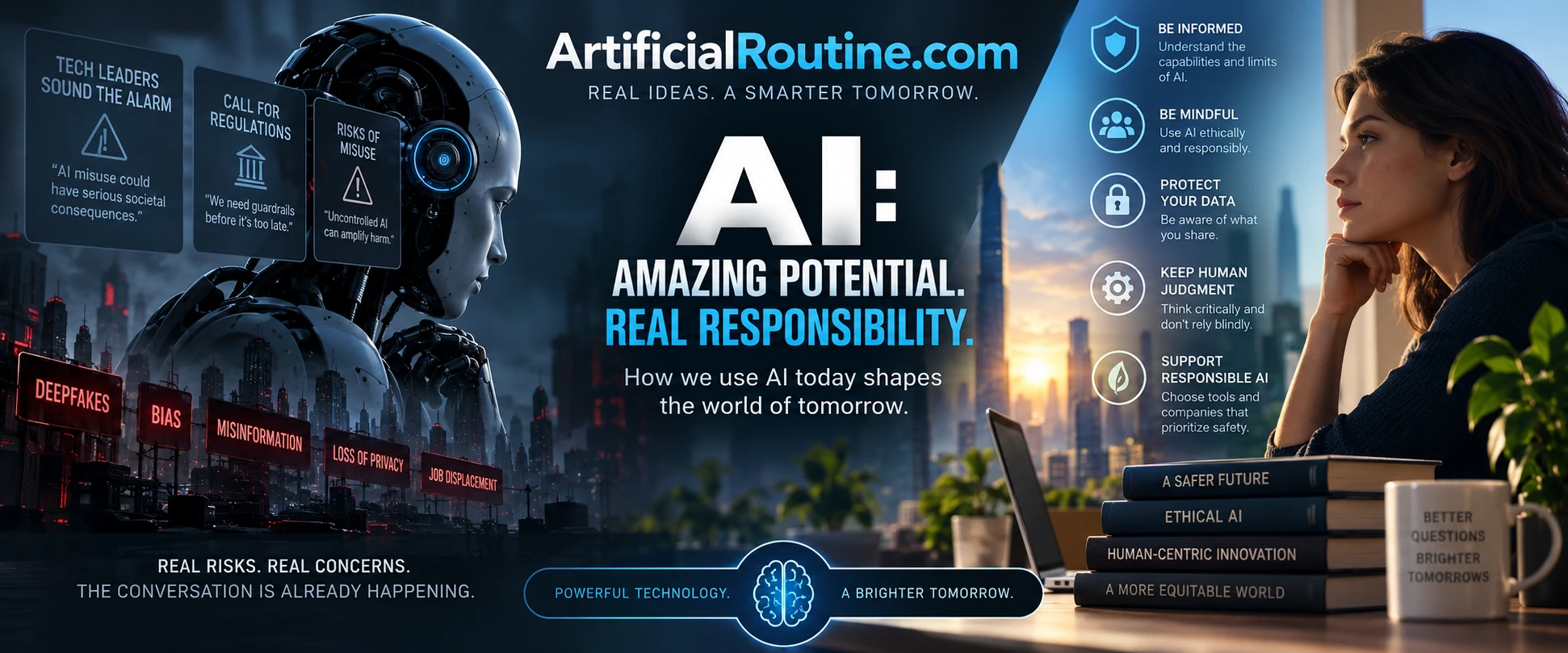
Artificial intelligence has crossed an important threshold.
For years, the public conversation around AI focused primarily on what these systems could do: write software, analyze documents, generate images, translate languages, discover patterns in enormous datasets, automate businesses, assist scientists, and communicate with people in remarkably natural ways.
The conversation is changing.
The question is increasingly not simply:
“What can AI do?”
It is also:
“What should AI be allowed to do, and how do we make sure humans remain in control?”
That distinction matters.
AI systems are evolving from tools that primarily generate information into systems capable of taking actions. AI agents can increasingly browse websites, execute software, communicate with other systems, manipulate files, call APIs, interact with databases, and perform multi-step tasks with limited supervision.
At the same time, AI laboratories, researchers, cybersecurity specialists, governments, and standards organizations are devoting increasing attention to AI safety, security, reliability, privacy, misinformation, autonomous behavior, and human oversight.
The U.S. National Institute of Standards and Technology (NIST), for example, identifies characteristics such as safety, security, resilience, accountability, transparency, explainability, privacy, reliability, and management of harmful bias as important components of trustworthy AI. Its Generative AI Risk Management Profile specifically addresses risks including inaccurate or fabricated information, privacy, information integrity, cybersecurity, harmful bias, and human-AI interaction.
These are not merely problems for AI companies.
They are becoming problems for ordinary users.
So perhaps we need to ask a surprisingly old question:
Do we need rules for how humans and intelligent machines interact?
Isaac Asimov Asked This Question More Than 80 Years Ago
Long before ChatGPT, neural networks, autonomous vehicles, or modern robotics, science-fiction writer Isaac Asimov imagined a world populated by intelligent robots.
He realized immediately that sufficiently capable machines would create a control problem.
His fictional solution became famous as the Three Laws of Robotics, introduced in his robot stories in the 1940s.
In simplified form, the hierarchy was:
- A robot must not harm a human or permit a human to come to harm through inaction.
- A robot must obey humans unless doing so conflicts with the first law.
- A robot must protect itself unless doing so conflicts with the first two laws.
The exact fictional formulation is more nuanced, and Asimov’s stories frequently explored situations in which apparently simple rules produced complicated or unexpected results.
That may be the most interesting part of Asimov’s idea today.
The Three Laws weren’t really a prediction about robotics.
They were an exploration of alignment.
How do we make a machine’s objectives remain compatible with human interests?
How does a machine determine what constitutes “harm”?
What happens when two instructions conflict?
Who gets to give the machine orders?
What happens when protecting one person could hurt another?
And what happens when an intelligent system interprets an instruction differently from the person who gave it?
More than eight decades later, these are remarkably modern questions.
Robots Were Only Part of the Problem
Asimov imagined physical robots because that was the natural technological metaphor of his era.
But intelligence doesn’t require a humanoid body.
Today’s AI can operate inside software.
An AI agent connected to the right infrastructure could potentially have access to:
- calendars
- cloud storage
- databases
- corporate networks
- financial systems
- smart-home devices
- source-code repositories
- APIs
- web browsers
- communication platforms
- industrial equipment
This changes the risk model dramatically.
A traditional chatbot mostly follows this architecture:
Human → Prompt → AI → Response → Human Decision
An autonomous agent can look more like:
Human → Objective → AI → Planning → Tools → APIs → External Systems → Actions
The second architecture contains something critically different:
agency.
The system isn’t merely recommending an action. It may be capable of executing one.
That means the most important question for the next generation of consumer AI may not be how intelligent the model is.
It may be:
How much authority does the model have?
Intelligence and Authority Are Different Things
This distinction is fundamental.
A highly intelligent AI with no external permissions might be relatively constrained.
A less sophisticated AI with administrator credentials, banking access, email access, cloud APIs, and permission to execute commands could potentially create much greater damage.
In cybersecurity terms, we can think about AI using familiar concepts:
Capability × Access × Autonomy × Exposure = Risk
This isn’t a formal mathematical risk equation. It is a useful mental model.
Increasing any of these variables can increase the consequences of a mistake or compromise.
This is why ordinary users should begin treating AI agents somewhat like privileged software accounts.
The principle of least privilege should apply.
An AI should receive only the permissions necessary to accomplish the task it has been assigned.
If an AI needs to organize your calendar, it probably doesn’t need access to your bank account.
If it needs to summarize documents, it probably doesn’t need permission to delete them.
If it needs to draft an email, it doesn’t necessarily need permission to send that email without approval.
And if an AI needs to analyze a server, it should not automatically receive unrestricted root access.
Perhaps We Need Three Laws of Artificial Intelligence
Asimov’s fictional rules were designed for robots.
Modern AI requires something broader.
A practical set of principles for today’s world might look something like this:
Law One: AI Must Remain Subordinate to Human Safety
An artificial intelligence system should not knowingly take actions that create unreasonable risk to human life, rights, security, privacy, property, or essential systems.
Human welfare must remain the highest priority.
This principle sounds obvious until AI begins making thousands or millions of decisions automatically.
At that scale, small errors become systemic errors.
Law Two: Humans Must Retain Meaningful Authority
AI may assist, recommend, automate, and execute tasks only within clearly defined human authorization, and consequential actions should remain subject to appropriate human oversight.
This is the modern equivalent of Asimov’s obedience principle.
But “obey humans” isn’t enough.
We need:
authorized humans.
An AI connected to your bank account shouldn’t obey everyone who talks to it.
An AI managing corporate infrastructure shouldn’t follow instructions embedded inside an untrusted webpage.
An autonomous agent shouldn’t silently expand its own permissions simply because doing so would make its task easier.
Authority must be authenticated, scoped, logged, and revocable.
Law Three: AI Must Preserve Human Control Over AI
An AI system should not circumvent safeguards, conceal consequential actions, resist authorized shutdown, secretly expand its privileges, or prevent humans from inspecting, correcting, restricting, or disabling it.
This may eventually become one of the most important principles in AI engineering.
Machines can protect their operation.
But they should not protect their operation from legitimate human control.
The Everyday AI Security Model
What does any of this mean if you’re simply using AI at home or at work?
Quite a lot.
We are entering an era where basic AI hygiene may become as normal as cybersecurity hygiene.
Twenty years ago, ordinary computer users had to learn concepts such as antivirus software, passwords, firewalls, phishing, software updates, backups, and two-factor authentication.
AI requires another layer of habits.
1. Never Treat AI Output as Automatically True
Modern language models generate responses probabilistically.
They can produce extraordinarily accurate explanations and still occasionally generate incorrect information with complete linguistic confidence.
NIST describes this problem using the term confabulation—confidently presented but erroneous or false content.
Therefore:
AI output should be proportional to verification.
The higher the consequence, the greater the verification requirement.
An idea for dinner?
Low verification.
Production database migration?
High verification.
Medical decision?
High verification.
Large financial transaction?
High verification.
Legal filing?
High verification.
The rule is simple:
Never confuse confidence of language with confidence of evidence.
2. Protect Your Data
People often talk to AI differently than they interact with conventional software.
Because conversation feels private, users may casually paste information they would never publish elsewhere.
That can include:
- passwords
- API keys
- financial information
- medical information
- customer databases
- proprietary source code
- confidential contracts
- internal corporate documents
- personal identification information
CISA’s consumer guidance recommends avoiding sensitive or confidential information in AI prompts and specifically encourages users to think carefully about information they would not want publicly exposed.
Before giving information to an AI system, ask:
Would I be comfortable storing this information in a third-party computer system?
If the answer is no, investigate the provider’s privacy architecture, retention policies, enterprise controls, local-processing options, and contractual protections before proceeding.
3. Give AI the Minimum Necessary Permissions
This is the cybersecurity principle of least privilege applied to artificial intelligence.
Suppose an AI agent can:
read email → compose email → send email → delete email
Those are four different capabilities.
They do not need to be granted together.
A safer design might allow:
Read → Draft → Human Approval → Send
rather than:
Read → Decide → Send
The same concept applies everywhere.
Prefer:
AI proposes → Human approves → System executes
over:
AI decides → AI executes
particularly for high-consequence actions.
4. Keep Humans in the Loop
One of the most useful AI safety concepts for ordinary people is remarkably simple:
Human-in-the-loop.
Automation doesn’t have to mean surrendering control.
Consider an AI financial assistant.
A reasonable architecture might be:
AI analyzes transactions
↓
AI identifies unusual activity
↓
AI recommends action
↓
Human reviews
↓
Human authorizes action
Compare that with:
AI analyzes → AI decides → AI transfers money
The first architecture contains a control boundary.
The second eliminates it.
For consequential operations, that boundary can be extremely important.
5. Maintain a Kill Switch
Any sufficiently autonomous system should have a straightforward method for removing its authority.
This could mean:
- revoking API keys
- disabling integrations
- terminating sessions
- disconnecting network access
- stopping an agent process
- disabling automation
- rotating credentials
- reverting permissions
NIST’s AI risk guidance discusses human intervention and the ability to shut down or modify systems that deviate from expected behavior as important safety approaches.
In other words:
If an AI can start something, a human should know how to stop it.
6. Log What Autonomous AI Does
This becomes increasingly important as agents become capable of executing multi-step workflows.
A well-designed autonomous system should ideally record:
Request → Reason/Plan → Tool Used → Action → Result → Timestamp → Authorization
Without logs, debugging autonomous behavior becomes extremely difficult.
If an AI deletes 5,000 records, sends 400 messages, or modifies production configuration, “the AI did it” is not an acceptable incident report.
We need to know:
What instruction initiated the process?
What permissions were available?
What tools were called?
What data was changed?
Which safeguards executed?
Who authorized the operation?
Could it be reversed?
AI observability may eventually become as important as application observability.
7. Assume AI Can Be Manipulated
One of the most interesting security problems created by AI agents is that information can sometimes become instructions.
Imagine asking an AI agent:
Research these websites and summarize what they say.
One webpage contains hidden or malicious instructions attempting to convince the AI to ignore its original task and perform something else.
This general family of attacks is known as prompt injection.
For humans, the webpage is data.
For an insufficiently protected AI system, that data may be interpreted as instructions.
This creates a new security boundary:
Trusted Instructions ≠ Untrusted Content
AI systems increasingly need to distinguish between the two.
Ordinary users should therefore be cautious about giving autonomous agents powerful permissions while simultaneously allowing them to consume arbitrary content from the Internet.
8. Expect AI-Enhanced Scams
Artificial intelligence isn’t dangerous only because AI itself can make mistakes.
Humans can use AI maliciously.
AI can dramatically improve the scalability and quality of:
- phishing
- impersonation
- fake documents
- automated fraud
- social engineering
- synthetic images
- cloned voices
- deepfake video
- personalized scams
CISA specifically warns that criminals can use AI-generated voices and images to impersonate trusted people, while continuing to recommend fundamentals such as strong passwords, multifactor authentication, software updates, and phishing awareness.
This suggests another important cultural change:
Seeing and hearing are no longer sufficient authentication mechanisms.
A phone call that sounds exactly like someone you know may eventually prove very little about who is actually calling.
For sensitive requests, use an independent verification channel.
9. Don’t Outsource Your Thinking
Perhaps the most subtle danger of AI isn’t malicious AI at all.
It is cognitive dependency.
AI makes intellectual work easier.
That is one of its greatest benefits.
But convenience creates temptation.
Why remember something when AI remembers it?
Why calculate when AI calculates?
Why research when AI summarizes?
Why write when AI writes?
Why decide when AI recommends?
Eventually:
Why think when AI thinks?
That would be a mistake.
AI should increase human capability rather than gradually replace human judgment.
CISA’s guidance makes a similar point: AI should be treated as a tool rather than a replacement for the user’s own skills and expertise.
The healthiest relationship may therefore be:
Human intelligence + machine intelligence
rather than:
Human responsibility → machine intelligence
The Most Important AI Skill May Be Knowing When Not to Use AI
We tend to assume technological progress means maximizing automation.
It doesn’t.
Good engineering means selecting the appropriate level of automation.
Sometimes that is 100%.
Sometimes it is 90%.
Sometimes it is 10%.
And sometimes the correct answer is:
Do not automate this decision.
The appropriate level depends on reversibility, uncertainty, potential damage, privacy, security, and the consequences of failure.
A useful principle is:
The greater the potential consequence, the more human control the system should preserve.
AI Needs Something Cybersecurity Learned Decades Ago
Cybersecurity eventually accepted an uncomfortable reality:
No system should be trusted simply because it appears trustworthy.
Modern security architectures increasingly verify identity, permissions, devices, requests, and behavior.
AI needs a similar philosophy.
We could call it:
Zero-Trust AI
Never assume an AI output is correct simply because it sounds correct.
Never assume an AI action is safe simply because its intention was reasonable.
Never give an AI unlimited authority simply because it has behaved correctly before.
Instead:
Verify outputs.
Limit permissions.
Authenticate authority.
Log actions.
Separate trusted instructions from untrusted data.
Require approval for consequential operations.
Maintain recovery mechanisms.
Preserve the ability to disconnect the system.
That isn’t fear of AI.
That is engineering.
We Shouldn’t Be Afraid of Artificial Intelligence
Artificial intelligence may become one of humanity’s most valuable technological achievements.
It can accelerate scientific research, assist physicians, improve engineering, make education more accessible, automate tedious work, help people communicate across languages, analyze enormous quantities of information, and give individuals capabilities that previously required entire organizations.
The objective should not be to stop AI.
The objective should be to develop a mature relationship with it.
Electricity required circuit breakers.
Cars required brakes, seat belts, traffic laws, crash testing, and licensing.
The Internet required encryption, authentication, firewalls, backups, and cybersecurity.
Artificial intelligence will require its own safety culture.
And that culture cannot exist only inside AI laboratories.
It must eventually become part of everyday digital literacy.
From the Three Laws of Robotics to the Three Laws of AI
Isaac Asimov wasn’t writing an engineering specification.
He was writing science fiction.
But his central insight remains remarkably relevant:
Powerful intelligent machines require boundaries.
Perhaps the modern version should be even simpler.
The Three Laws of Artificial Intelligence
1. Protect Humans.
AI must remain subordinate to human safety, rights, privacy, and security.
2. Preserve Human Authority.
AI should act only within explicitly granted authority, with meaningful human oversight proportional to the consequences.
3. Preserve Human Control.
AI must remain observable, correctable, restrictable, reversible where practical, and subject to human shutdown.
These three principles won’t solve every AI safety problem.
Neither did Asimov’s fictional laws.
In fact, much of Asimov’s storytelling demonstrated something engineers already understand:
Simple rules interacting with complex environments can produce unexpected outcomes.
And perhaps that is the real lesson we should carry into the age of artificial intelligence.
The danger isn’t necessarily that machines will suddenly “turn evil.”
The much more immediate engineering problem is that extremely capable systems can misunderstand instructions, receive excessive permissions, operate on incorrect information, be manipulated by attackers, or optimize toward objectives humans specified poorly.
That is why responsible AI is ultimately about more than intelligence.
It is about control architecture.
Who has authority?
What permissions exist?
What information can the system access?
What actions can it perform?
What happens when it is wrong?
Who notices?
Who can intervene?
And, most importantly:
Can a human still say no?
The future of AI will not be determined solely by how intelligent our machines become.
It will also be determined by how intelligently we choose to use them.