
 BitFlip27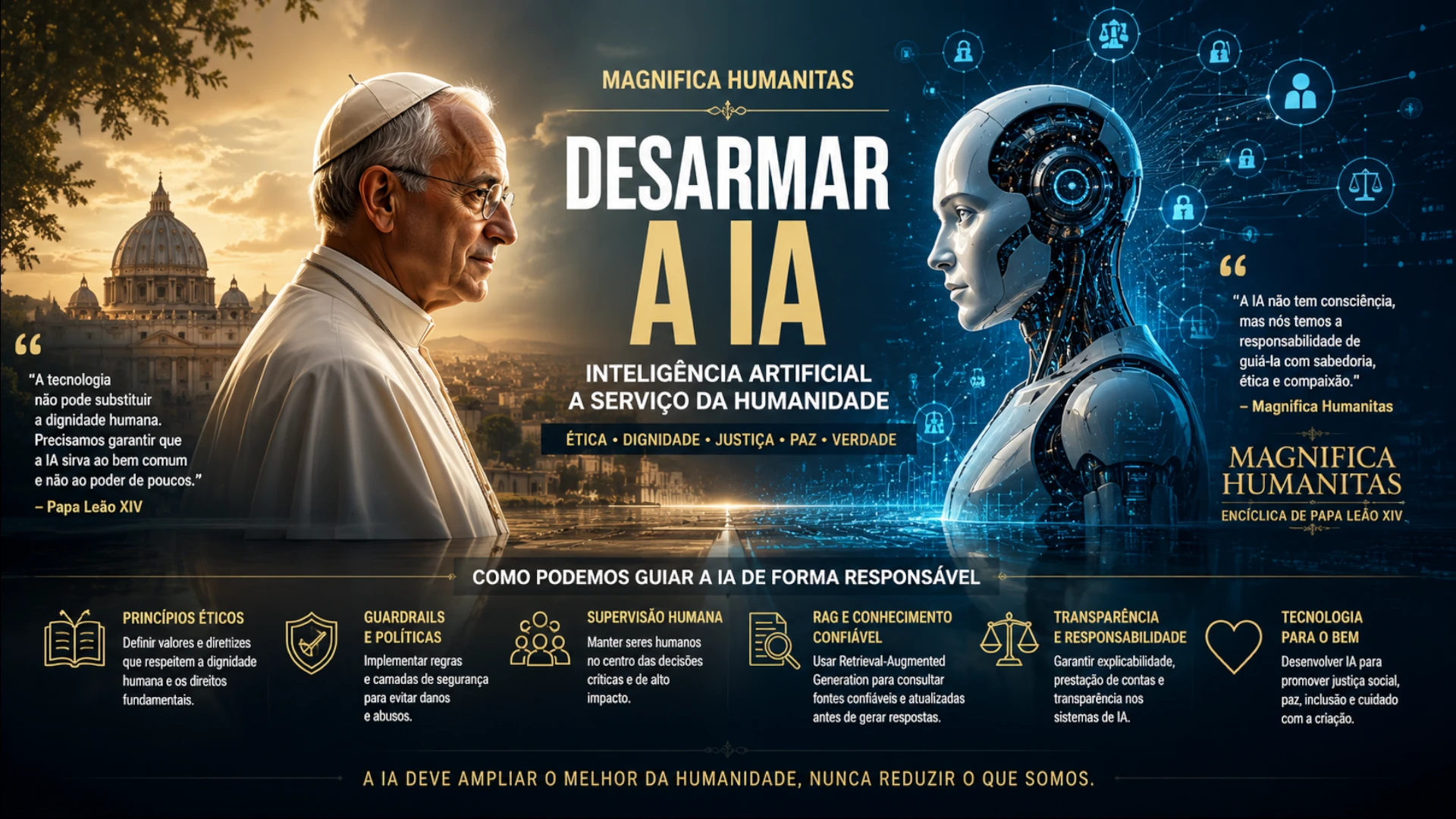
We often wake up feeling like the world is changing faster than we can process. Every day, emerging technology reshapes how we work, connect, and dream. It is easy to feel overwhelmed by the rapid rise of artificial intelligence in our daily lives.
On May 15, 2026, Pope Leo XIV signed the encyclical Magnifica Humanitas to offer a steady hand during this transition. This document serves as a vital compass for those navigating the complex future of humanity and ai. By addressing the intersection of faith and innovation, the pope on ai provides a framework that honors our shared dignity.
Understanding this perspective helps us weigh the ai challenges against the vast ai opportunities ahead. As we look toward the future technology landscape, we must prioritize human values. This balanced approach ensures that the future of ai remains a tool for progress rather than a source of fear.
Key Takeaways
- Pope Leo XIV released his guidance on technology to help society navigate digital shifts.
- The encyclical emphasizes that human dignity must remain at the center of all innovation.
- We must carefully balance the risks of new systems with their potential benefits.
- Faith and technology can work together to create a more ethical digital future.
- The document encourages a thoughtful, proactive approach to managing technological growth.
The Call for Ethical Stewardship in Magnifica Humanitas
In a world rapidly transformed by automation, the call for ethical stewardship has never been more urgent. As society navigates the complexities of the digital age, the need for digital responsibility becomes a defining challenge for our time. This new framework encourages us to look beyond mere efficiency and consider the deeper impact of our tools on the human experience.
Understanding the Encyclical’s Core Message
The encyclical Magnifica Humanitas, authored by Pope Leo XIV, serves as a profound invitation to rethink our relationship with machines. It asserts that technology is not a force antagonistic to humanity, nor is it inherently evil. Instead, the document suggests that we must disarm AI to ensure it serves human dignity, truth, and justice.
The vatican ai perspective emphasizes that technology should support the common good rather than act as a tool for manipulation or conflict. By focusing on ethical technology, the pope on ai highlights that our progress must remain rooted in values that protect the vulnerable. This vatican technology stance provides a necessary moral framework for developers and policymakers to follow.
The Shift Toward Human-Centric Technology
Moving forward, the integration of human centered ai into our daily lives requires a deliberate shift in priorities. We must ensure that ai for good remains the primary objective for every innovation. When we prioritize human focused technology, we create systems that empower individuals rather than diminish their agency.
The intersection of ai and society demands that we cultivate responsible technology that respects the complexities of the human spirit. By embracing ai ethics, we can build a future where digital tools enhance our lives without compromising our core values. This transition is essential for maintaining a healthy balance between rapid innovation and the preservation of our shared humanity.
Defining the Boundaries of Artificial Intelligence
As we integrate more complex software into our daily lives, defining the boundaries of artificial intelligence becomes a moral necessity. While these intelligent systems can process vast amounts of data, they remain fundamentally different from the human beings who create them. Establishing clear limits is essential to ensure that technology serves our society rather than dictating its path.
AI as a Tool Versus AI as an Agent
It is a common misconception to view advanced software as an autonomous agent capable of moral reasoning. In reality, ai systems are sophisticated computational tools designed to perform specific tasks based on programmed logic. They can simulate human conversation or mimic creative output, but they lack the internal life that defines a person.
These systems do not possess a moral conscience, empathy, or spiritual capabilities. To better understand this distinction, consider the following limitations of current ai applications:
- Lack of Consciousness: Machines do not experience feelings or self-awareness.
- Absence of Moral Judgment: They cannot distinguish between right and wrong in a human sense.
- Simulation vs. Reality: AI mimics human patterns without understanding the underlying meaning or intent.
Protecting Human Dignity in the Digital Age
The pursuit of human centered ai requires us to prioritize the well-being of people above the efficiency of algorithms. When we allow ai decision making to operate without oversight, we risk undermining the very values that define our society. Protecting human dignity means ensuring that technology remains a servant to humanity, not a replacement for human judgment.
The intersection of technology and humanity demands a commitment to ethical technology. We must remain vigilant regarding ai control to prevent the erosion of individual agency. By focusing on human rights and ai, we can foster a future where human machine interaction enhances our lives while respecting the unique nature of the human person.
Ultimately, the goal is to align ai and human rights through thoughtful design. We must ensure that every digital advancement upholds the inherent worth of every individual. By maintaining these boundaries, we protect the core of our shared experience from being reduced to mere data points.
Check Out these other Blog Posts
 |  |
The Myth of Machine Consciousness and Moral Agency
We must address the persistent myth that computational power equates to genuine moral agency. While artificial intelligence has become a cornerstone of modern digital transformation, it remains a collection of sophisticated algorithms rather than a sentient being. Confusing high-speed data processing with human consciousness creates significant risks for ai and society.
Why Computational Power Does Not Equal Understanding
The field of cognitive computing often impresses us with its ability to mimic human patterns. However, these systems operate through statistical probability rather than true comprehension. Even the most advanced artificial general intelligence (AGI) concepts are built on mathematical models that lack a grasp of reality.
True understanding requires a subjective experience of the world, which machine intelligence simply does not possess. When we mistake output for insight, we fall into a trap of anthropomorphism. This ai ethics debate is essential because it reminds us that a tool, no matter how complex, cannot hold itself accountable for its actions.
The Absence of Empathy in Large Language Models
Current generative ai and large language models (LLM) excel at predicting the next word in a sequence. They can simulate a polite tone or a helpful persona, but they do not feel empathy or compassion. These systems are fundamentally incapable of moral judgment or spiritual depth.
This limitation becomes dangerous when we rely on technology to handle sensitive human interactions. For instance, ai risk is amplified in scenarios involving conflict. Artificial intelligence does not remove the intrinsic inhumanity of war; it can only bring about conflict more quickly and render it more impersonal.
The machine is a mirror of our data, not a vessel for our conscience. It can process the logic of a decision, but it cannot weigh the moral gravity of the outcome.
As we integrate this emerging technology into our daily lives, we must maintain a clear boundary. We must ensure that digital ethics remain a human responsibility. By recognizing that an LLM is merely a tool, we protect the unique value of human judgment in an increasingly automated world.
Bridging the Gap Between Computation and Conscience
While machines lack a soul, the systems they run can be designed to reflect our deepest human values. Software engineers act as the primary architects of this digital landscape, turning abstract ai principles into functional code. By prioritizing ethical computing, developers ensure that technology serves humanity rather than merely processing data.

The Responsibility of the Software Engineer
The development process requires absolute clarity regarding accountability at every stage. Engineers must move beyond simple functionality to consider the broader impact of their ai solutions on society. This shift demands a commitment to ai responsibility, where every line of code is evaluated for its potential influence on human dignity.
Professionals in computer science are increasingly adopting rigorous standards to prevent unintended consequences. By integrating ai ethics research into the daily workflow, teams can identify risks before they manifest in production environments. This proactive stance is essential for maintaining public trust in emerging technologies.
Designing Systems That Reflect Human Values
Creating trustworthy ai requires more than just technical proficiency; it demands a comprehensive ai ethics framework. Developers must embed ai alignment strategies into the core architecture of their models. This ensures that machine outputs remain consistent with human intent and societal norms.
Effective ai governance relies on robust human oversight to maintain control over autonomous processes. When engineers design systems with built-in guardrails, they foster responsible ai that respects user privacy and safety. Ultimately, the goal is to build moral ai that functions as a reliable partner in our daily lives.
The following table outlines the core pillars of ethical development for modern teams:
| Pillar | Focus Area | Outcome |
|---|---|---|
| Transparency | Model Logic | Accountability |
| Fairness | Data Bias | Equity |
| Safety | Constraint Logic | Reliability |
By focusing on these pillars, the industry can advance responsible technology that benefits everyone. The bridge between computation and conscience is built one decision at a time through careful ethical decision making.
Implementing Retrieval-Augmented Generation for Ethical Alignment
Implementing Retrieval-Augmented Generation (RAG) offers a technical path toward more reliable and ethical AI. By connecting large language models to verified external data sources, developers can ensure that system outputs remain grounded in reality. This approach represents a significant shift in software engineering, moving away from black-box models toward transparent, verifiable architectures.
How RAG Enhances Factuality and Accountability
The core strength of RAG lies in its ability to provide clear citations for the information it generates. When a system retrieves data from a trusted repository, it creates a transparent trail of evidence for every claim. This level of AI accountability is essential for building trust with users who rely on these tools for critical decision-making.
Furthermore, this method aligns with the need for ethical computing by ensuring that content selection remains under human oversight. By controlling the knowledge base, organizations can protect personal data and ensure that the information provided adheres to established safety guidelines. This creates a safer environment for users interacting with generative AI.
Reducing Hallucinations Through Controlled Knowledge Retrieval
One of the most persistent challenges in computer science is the tendency for an LLM to “hallucinate” or invent facts. Knowledge retrieval acts as a guardrail, forcing the model to reference specific, pre-approved documents before formulating an answer. This significantly reduces the risk of misinformation and improves the overall quality of the interaction.
By limiting the model’s creative freedom to a curated set of facts, developers achieve better AI alignment with human values. This controlled environment ensures that the system acts as a helpful assistant rather than an unpredictable agent. The following table highlights the key differences between standard models and those utilizing RAG technology.
| Feature | Standard LLM | RAG-Enabled System |
|---|---|---|
| Data Source | Static Training Data | Dynamic External Databases |
| Factuality | Prone to Hallucinations | High Accuracy via Citations |
| Accountability | Difficult to Trace | Transparent Source Tracking |
| Updates | Requires Retraining | Real-time Knowledge Updates |
Policy-Based Controls as Digital Guardrails
As digital power grows, the need for clear regulatory tools becomes essential for maintaining justice and safety. The current landscape of technology governance demands that we move beyond mere suggestions toward concrete ai guardrails. By implementing these controls, organizations can ensure that their systems uphold the common good while curbing the distorting effects of unchecked technological influence.

Establishing Hard Constraints for AI Behavior
To maintain ai security, developers must define specific boundaries that prevent systems from deviating from intended outcomes. These hard constraints act as a foundation for ai principles, ensuring that every decision made by an algorithm remains within safe parameters. When we establish clear ai guidelines, we provide the necessary structure for responsible innovation.
Adopting a robust ai accountability framework allows teams to monitor performance against predefined safety rules. This proactive approach helps in identifying potential risks before they manifest in real-world applications. By prioritizing ai compliance, companies demonstrate a commitment to ethical standards that protect users and society at large.
The Mechanics of Policy Enforcement in Machine Learning
The technical implementation of an ai governance framework involves embedding policies directly into the software architecture. This ensures that ai control is not just a manual oversight process but an automated, reliable feature of the system. Organizations that utilize a comprehensive ai compliance framework can effectively manage the complexities of modern technology policy.
Following established ai best practices and ai standards is vital for long-term success. These methods help teams navigate the nuances of ai regulation policy while maintaining high levels of performance. The following table outlines how different governance strategies contribute to a stronger ai ethics policy.
| Governance Strategy | Primary Benefit | Implementation Focus |
|---|---|---|
| Hard Constraints | Prevents unsafe actions | System architecture |
| Policy Auditing | Ensures transparency | Compliance reporting |
| Human-in-the-loop | Adds moral judgment | Operational oversight |
| Automated Monitoring | Real-time detection | Technical security |
The Role of Constitutional AI in Modern Development
Scientific discoveries are talents entrusted to humanity so that they may bear fruit for the common good. As artificial intelligence continues to evolve, developers must ensure these powerful tools remain grounded in human values. Constitutional AI offers a promising path forward by embedding specific ethical rules directly into the core of intelligent systems.
Defining Principles for Autonomous Systems
Creating autonomous systems requires a clear set of ai principles that guide decision-making processes. By establishing a robust ai policy, developers can create ai moral frameworks that prevent harmful outputs before they occur. These ai ethics guidelines act as a digital constitution, ensuring that the machine operates within safe, predefined boundaries.
This approach is essential for modern ai development. It moves beyond simple technical constraints to address the deeper, qualitative aspects of machine behavior. When systems are built with these foundational rules, they become more predictable and reliable for end-users.
Iterative Refinement Through Constitutional Feedback
The process of ai alignment relies heavily on iterative feedback loops. Developers use these loops to test how ai systems respond to complex scenarios, refining their behavior based on the established constitution. This continuous improvement cycle is vital for managing the risks associated with advanced machine intelligence.
This methodology is particularly relevant as we approach the horizon of artificial general intelligence. While the ai consciousness debate continues to capture public imagination, the practical focus remains on cognitive computing that serves human needs. By prioritizing agi safety through constitutional feedback, researchers can foster innovation while maintaining strict accountability. Constitutional AI ensures that as technology grows more capable, it remains a beneficial tool for all of society.
Human Oversight as the Ultimate Safety Mechanism
Intelligent automation requires a steady hand to ensure it serves the common good. While software can process vast amounts of data, it lacks the capacity for genuine moral reflection. True progress stems from a heart open to others, an intelligence willing to listen, and a will that seeks what unites.
The Necessity of the Human-in-the-Loop Approach
The human-in-the-loop approach serves as a vital bridge between raw computation and real-world impact. By keeping people involved in critical workflows, organizations ensure that ai safety remains a top priority. This method allows for nuanced ethical decision making that algorithms simply cannot replicate on their own.
When we rely solely on automated systems, we risk losing the context that only human experience provides. Implementing constitutional ai principles helps guide these systems, but human intervention acts as the final filter. This interaction is essential for maintaining ai security in sensitive environments.
“The measure of any technology is not its speed, but its ability to enhance the dignity and connection of the human person.”
Balancing Automation with Human Accountability
Achieving a balance between efficiency and ai accountability is a core challenge for modern developers. While ai guardrails provide necessary boundaries, they do not replace the need for ai responsibility. Organizations must ensure that every automated action can be traced back to a clear human decision-making process.
Effective human machine interaction requires clear protocols that define when a machine should defer to a person. This structure supports safe ai deployment by preventing systems from operating in a moral vacuum. The following table illustrates how human oversight improves outcomes compared to fully autonomous systems.
| Feature | Fully Autonomous | Human-in-the-Loop |
|---|---|---|
| Decision Speed | Very High | Moderate |
| Ethical Nuance | Low | High |
| Accountability | Ambiguous | Clear |
| Error Correction | Reactive | Proactive |
By prioritizing human oversight, we create a digital future that respects human values. This approach ensures that technology remains a tool for unity rather than a source of division. Ultimately, the goal is to foster a partnership where machines handle the complexity, while humans provide the wisdom.
Case Study: Applying Vatican Principles to Enterprise AI
Translating the lofty ideals of Magnifica Humanitas into the daily operations of a modern corporation requires more than just good intentions. Organizations are increasingly seeking ways to align their enterprise AI strategies with broader moral frameworks. By looking toward the guidance of Pope Leo XIV, companies can begin to address the systemic distortions that often lead to inequality within digital infrastructures.
Evaluating an Ethical Framework in a Corporate Setting
The core of this approach involves a rigorous examination of conscience within the organization. Leaders must identify where current AI applications might inadvertently perpetuate bias or harm. This process of purification ensures that the AI governance framework is not merely a document, but a living commitment to trustworthy AI.
Implementing these AI principles requires a shift in how teams view their technical output. Rather than focusing solely on efficiency, companies must prioritize ethical leadership. This ensures that every AI solution respects human dignity while maintaining high AI standards.
Lessons Learned from Implementing Value-Aligned AI
One of the most effective ways to maintain control is through retrieval-augmented generation (RAG). By using RAG, developers can ground machine responses in verified, ethical data sources. This technical choice serves as a practical AI compliance framework, reducing the risk of harmful outputs.
The following table highlights the transition from standard development to a value-aligned approach:
| Feature | Traditional AI | Value-Aligned AI |
|---|---|---|
| Primary Goal | Maximum Throughput | Human Dignity |
| Data Source | Unfiltered Web | Curated Knowledge |
| Accountability | Automated Only | Human-in-the-Loop |
| Compliance | Reactive | Proactive Governance |
Ultimately, the integration of AI and religion-inspired ethics creates a more resilient business model. Companies that adopt a robust AI accountability framework find that they are better prepared for future regulatory shifts. By following these AI best practices, organizations demonstrate that technology can indeed serve the common good.
Challenges in Scaling Responsible Innovation
Modern digital transformation is not just about speed; it is about ensuring that human responsibility remains the core of every innovation. As organizations push the boundaries of generative AI, they often face the difficult task of maintaining safety standards while pursuing rapid growth. The goal is not to give machines a conscience, but to ensure that human oversight remains the primary driver of technological progress.
Navigating the Tension Between Speed and Safety
The current landscape of AI development often forces workers to adapt to the speed of machines rather than having machines support the needs of the worker. This shift creates significant AI challenges, as the pressure to deploy large language models can sometimes overshadow the need for rigorous AI safety protocols. Leaders must recognize that true responsible innovation requires slowing down to ensure that systems align with human values.
“The challenge is not giving machines a conscience, but ensuring that human responsibility remains at the center of technological progress.”
Effective AI strategy involves creating a culture where safety is not an afterthought. By integrating AI governance early in the lifecycle, companies can mitigate risks while still seizing AI opportunities. This approach ensures that enterprise AI remains a tool for empowerment rather than a source of workplace friction.
Ensuring Transparency in Complex AI Architectures
Complexity in AI architecture often leads to a “black box” problem, where decision-making processes become opaque. To combat this, AI transparency and explainable AI must become standard requirements for all new deployments. Clear AI documentation allows stakeholders to understand how ethical algorithms function within a broader system.
Investing in AI ethics research provides the necessary foundation for building trust with users. When organizations prioritize technology policy and AI regulation policy, they create a safer environment for everyone. Ultimately, protecting human rights and AI requires a commitment to openness and accountability at every level of the development process.
The path toward responsible ai requires a deep commitment to the preservation of human dignity. As society navigates the complex ai ethics debate, the focus must remain on how technology and humanity intersect to serve the common good. True progress relies on a digital conscience that guides every step of development.
Developers and leaders must prioritize ai transparency to build lasting ai trust. By integrating explainable ai into every new ai architecture, organizations ensure that systems remain accountable to the people they serve. This shift toward trustworthy ai transforms how the world views the future of humanity and ai.
Responsible innovation demands that creators look beyond mere efficiency. The future of ai depends on our ability to embed human values into the core of machine learning. When ai research aligns with the needs of the heart, the result is a harmonious balance between technical power and moral clarity.
The ultimate goal is a world where machines support the flourishing of every person. By fostering a culture of care, society secures a future where ai and humanity thrive together. This journey toward a better digital age is measured by the strength of our relationships and our capacity for empathy.
FAQ
What is the primary focus of Pope Leo XIV’s encyclical, Magnifica Humanitas?
The encyclical focuses on the intersection of faith and emerging technology, specifically addressing the need for a human centered ai approach. Pope Leo XIV emphasizes that as we navigate the future of ai, our priority must be the protection of human dignity and the promotion of the common good through responsible ai practices.
How does the Vatican ai perspective define the role of a software engineer in ethical development?
According to the vatican technology stance, the software engineer is a vital architect of a digital conscience. They are responsible for bridging the gap between raw machine intelligence and human values by implementing robust ai frameworks and an ai ethics framework that ensures ethical decision making throughout the lifecycle of ai development.
Why does Magnifica Humanitas argue that generative ai lacks moral agency?
The text debunks the myth that computational power equates to true understanding. While generative ai and large language models (llm) can process vast amounts of data, they lack the spiritual depth and empathy inherent to humanity. This distinction is crucial in the ai ethics debate to prevent the dangerous assumption that artificial general intelligence (agi) could ever replace human conscience.
What technical safeguards does the encyclical suggest for improving ai accountability?
It highlights the use of retrieval augmented generation (rag) as a method for enhancing factuality and ai transparency. By utilizing controlled knowledge retrieval, developers can reduce hallucinations in ai systems, ensuring that ai applications remain reliable and aligned with trustworthy ai standards.
How do ai guardrails and policy-based controls function within this framework?
Ai guardrails act as digital boundaries that enforce ai compliance and ai safety. By establishing an ai accountability framework and clear ai guidelines, organizations can ensure that machine learning models operate within the constraints of ai regulation policy, protecting human rights and ai integrity.
What is the significance of the human-in-the-loop approach in intelligent automation?
Human oversight is presented as the ultimate safety mechanism. Even as intelligent automation increases efficiency, the human-in-the-loop model ensures that human accountability remains central to ai decision making. This prevents the risks of unchecked ai control and maintains a high level of ai security.
How can a modern enterprise ai strategy align with Vatican principles?
A leader can demonstrate ethical leadership by adopting an ai governance framework that mirrors the values in Magnifica Humanitas. This involves prioritizing responsible innovation, ensuring explainable ai, and fostering an environment where digital ethics guide all ai solutions to benefit society.
What role does Constitutional ai play in the development of autonomous systems?
Constitutional ai provides a method for embedding ai moral frameworks directly into the architecture of autonomous systems. Through iterative feedback and defined principles, ai alignment is achieved, making future technology safer and more predictable for all of humanity.
What are the biggest ai challenges mentioned regarding digital transformation?
One of the primary ai challenges is scaling responsible innovation while maintaining the necessary speed of digital transformation. The encyclical suggests that navigating the tension between rapid progress and ai risk requires a deep commitment to ai ethics research and a proactive technology governance strategy.
How does the Pope on ai view the future of humanity and ai interaction?
Pope Leo XIV views the future of humanity and ai as an opportunity for ethical innovation. By focusing on human focused technology and maintaining a clear distinction between tools and agents, society can leverage ai for good while ensuring that digital responsibility remains at the heart of our technology policy.